Get a peer review of your building's structure cost with NO risk. Click here to get started
Demolition began in mid-December 2025 at 299 Broadway in Somerville, marking the first physical step toward rebuilding a long-underutilized block in Winter Hill.
The site is being redeveloped by Mark Development, Beacon Communities, and Samuels & Associates, designed by Utile, with landscape architecture by Future Green Studio, structural engineering by H+O, and construction managed by D.F. Pray General Contractors and Plumb House.
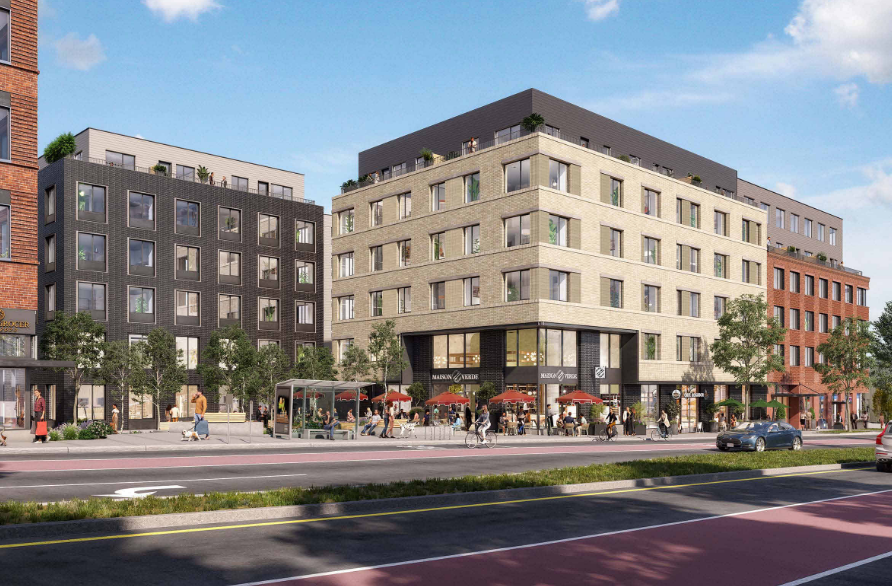
When complete, the project will deliver 320 residential units across 330,000 GSF, combining mixed-income housing with ground-floor retail and community space along Broadway.
The Scope: Housing at Meaningful Scale
Winter Hill Buildings A and B will provide 240,000 net square feet of residential space. Of the 320 total homes, 48 percent are affordable rentals and 52 percent are market-rate rentals.
Affordable units will range from one- to three-bedrooms. Market-rate homes will range from studios to three-bedrooms.
At nearly half the unit count, affordability is not symbolic. It shapes financing, phasing, and long-term asset positioning.
The residential program is supported by:
- 13,640 square feet of retail space intended for local and regional tenants
- A 3,000 square foot community room

Rebuilding the Broadway Corridor
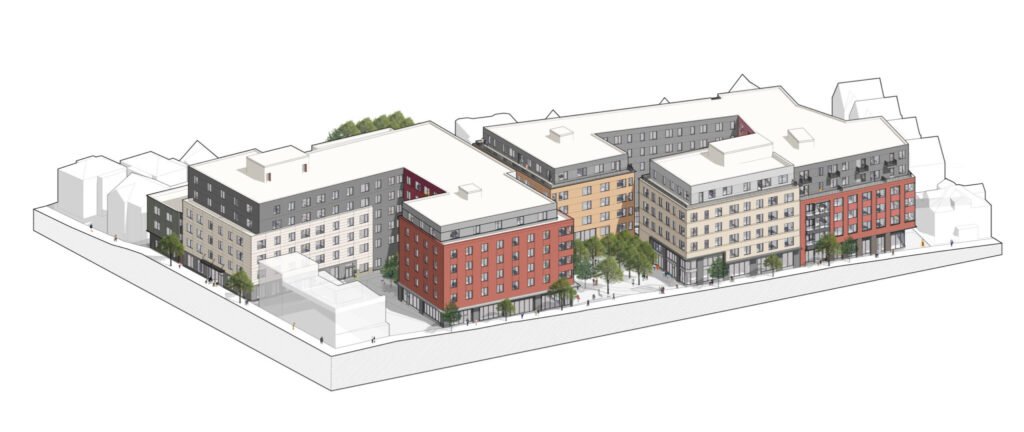
Utile’s design distributes the program across two buildings and transitions in height from six stories along Broadway down toward adjacent residential blocks. This step-down strategy maintains corridor presence while responding to surrounding homes.
Rather than presenting a single continuous facade, the massing breaks into volumes that reflect neighborhood rhythm. Retail frontage activates the street edge. Public access through the site restores permeability across the block.
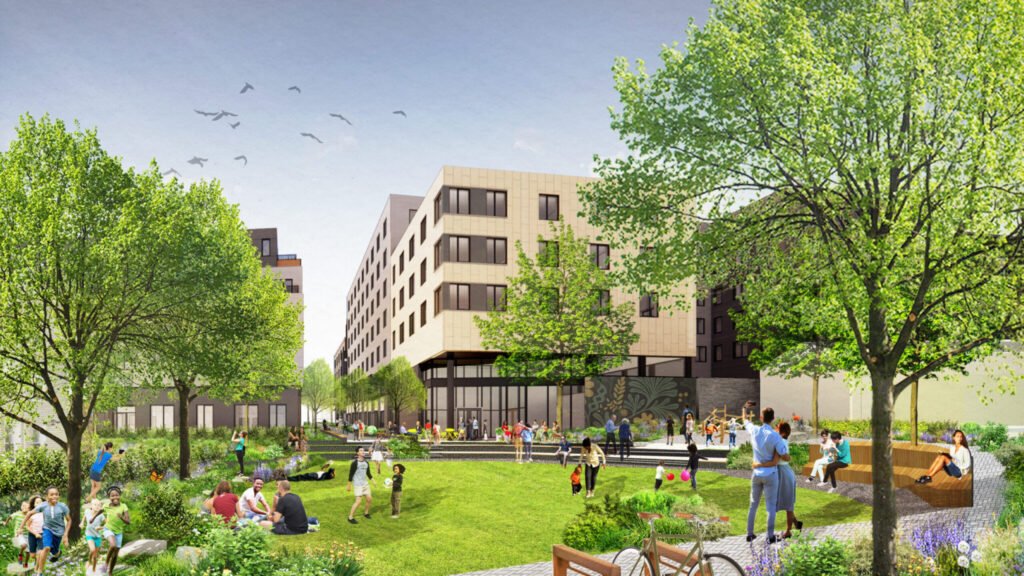
Future Green Studio’s landscape strategy integrates open space into circulation, strengthening the relationship between buildings and the street.
From Demolition to Delivery
With demolition underway, the project now shifts from entitlement and design into vertical construction sequencing and execution.
Have a multifamily development in design, and curious if there are cost-saving opportunities? Check out our RISK-FREE Peer Review to reduce structure costs. You owe $0 unless you save $100k or more.